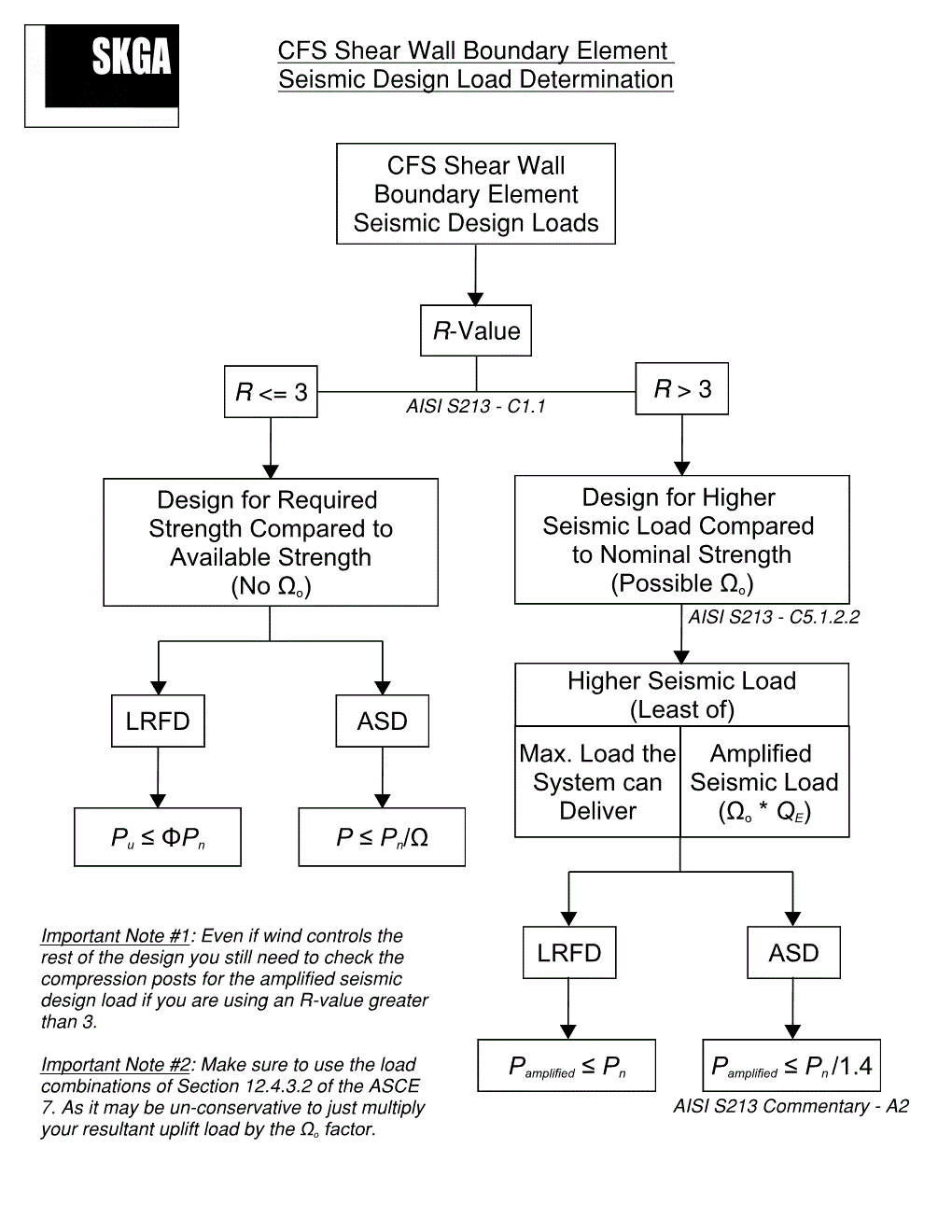
Do you have to amplify the seismic load acting on CFS Shear Wall Boundary Elements (Compression Posts)?
Load-bearing cold-formed steel (CFS) framing is on the rise. And while load-bearing CFS design is similar to load-bearing wood design, there is one distinct difference that is often overlooked. Here is a recent question about load-bearing CFS design.
Q. We have a load-bearing CFS project that uses plywood shear walls as its lateral system. We have heard that you have to amplify the seismic design load for the shear wall boundary elements (compression posts), is that really true? We don’t have to do that in wood design.
A. Well, it depends. The answer is...
- Yes, if the Seismic Response Modification Coefficient (R) for the building is greater than 3.
- No, if the Seismic Response Modification Coefficient (R) for the building is less than or equal to 3.
Why? AISI Standard S213-07 currently governs the lateral design of cold-formed steel load-bearing projects. Section C1.1 of that standard requires that Section C5 be complied with if the R-value used in the shear wall design is greater than 3.
Section C5.1.2.2 states the following:
C5.1.2.2: Studs or other vertical boundary members and uplift anchorage thereto shall have the nominal strength to resist the following, as applicable:
(a) In the United States and Mexico: Loads that the system can deliver, but need not exceed the amplified seismic load.
Thus, the studs or other boundary members (ie. compression posts), in addition to the uplift anchorage, need to be designed for a higher seismic design load. (Note: Per Section A2 of AISI S200, Boundary Member is defined as “Diaphragm and shear wall boundary member to which the diaphragm transfers forces. Boundary members include chords and drag struts at diaphragm and shear wall perimeters, interior openings, discontinuities and re-entrant corners.”)
What is this higher seismic load? The code gives two options.
- The maximum loads that the system can deliver, or
- The amplified seismic loads.
What are the maximum loads the system can deliver? The nominal capacity of the sheathing material or other member or connection that controls the design. It is important to note that the commentary recommends increasing the nominal capacity of the sheathing by 20% to 30%. (AISI S213 commentary Section C5.1)
What is the amplified seismic load? Per Section A2, the amplified seismic load is the load determined from the load combinations that include the seismic load effect including overstrength factor, Ωo, for strength design (LRFD) or for allowable stress design (ASD). However, per Section A2 of the AISI S213 commentary, if an ASD load combination is used, then the nominal strength must be divided by 1.4.
What capacity level do I compare this higher seismic load to? This is where we get a little bit of a break. Section C5.1.2.2 above states that the vertical boundary members shall have the nominal strength to resist the higher loads.
What is the nominal strength? Strength of a component (without the resistance factor or safety factor applied) to resist the load effects.
Important Note #1: Even if wind controls the rest of the design, you still need to check the compression posts for the amplified seismic design load if you are using an R-value greater than 3.
Important Note #2: Make sure to use the load combinations in ASCE 7 Section 12.4.3.2 as it may be un-conservative to just multiply your resultant uplift load by the Ωo factor.
See the flowchart below for a simplified approach to this issue.